
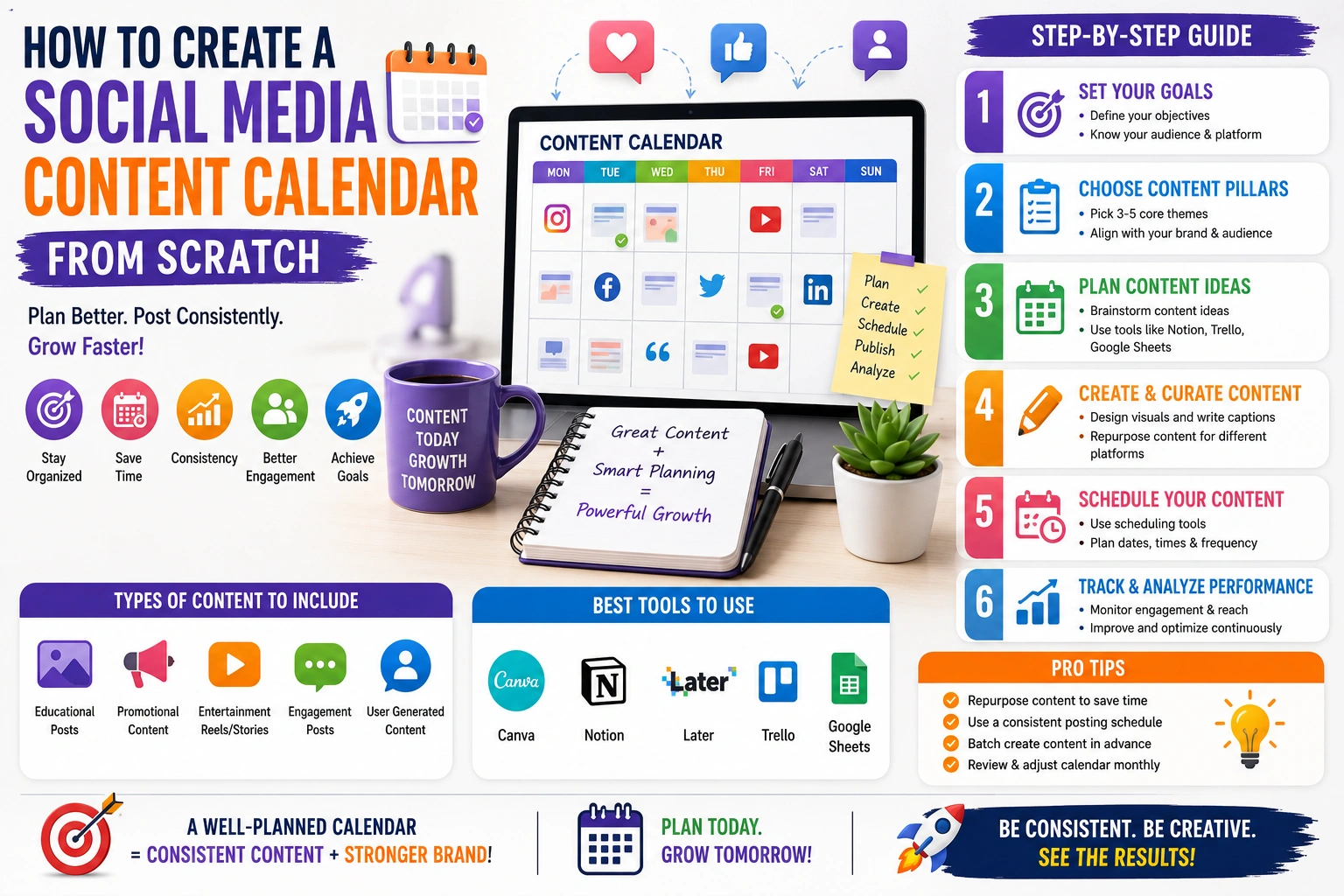
If you have ever stared at a blank screen wondering what to post on your brand’s social media accounts, you are not alone. Consistency is the secret ingredient to online growth, but staying consistent without a plan is nearly impossible. This is where a social media content calendar comes in.
Whether you are a solo creator, a digital marketing freelancer, or managing a growing agency, building a content calendar from scratch will save you hours of stress and help you build a highly engaged audience.

In this comprehensive guide, we will walk you through the exact steps to create a content calendar that works for your unique goals.
What is a Social Media Content Calendar?
A social media content calendar is a digital schedule that outlines exactly what, when, and where you will publish upcoming content. It can be as simple as a basic Google Sheet or as advanced as a fully automated dashboard in tools like Notion or Trello.
Typically, a well-structured calendar includes:
- The date and time a post will go live.
- The social media platform (Instagram, LinkedIn, X, etc.).
- The visual assets (images, graphics, or videos).
- The exact caption and hashtags.
- Relevant links or tags.
Why You Absolutely Need a Content Calendar
If you want to treat your online presence like a serious business—and generate real revenue or leads—winging it simply won’t work. Here is why you need to set up a calendar today:
- Maintains Consistency: Algorithms favor accounts that post regularly. A calendar ensures you never miss a day.
- Saves Time: Batch-creating and scheduling content in advance frees up your daily schedule for other operational tasks.
- Reduces Errors: Planning ahead gives you time to proofread captions, check links, and ensure your messaging aligns with your brand voice.
- Improves Tracking: When your content is organized, it is much easier to look back and analyze which posts performed the best.
Step-by-Step Guide to Building Your Calendar from Scratch
Follow these actionable steps to build your first social media schedule.
Step 1: Audit Your Current Social Media Presence
Before looking forward, you need to look back. Review your current profiles. Which platforms bring you the most traffic? What type of content (Reels, carousels, text posts) gets the highest engagement? Focus your energy on the platforms that actually deliver results rather than trying to be everywhere at once.
Step 2: Establish Your Content Pillars
Content pillars (or buckets) are 3 to 5 core topics that your brand will consistently discuss. For example, if your website focuses on digital operations, your pillars might be:
- Productivity tips.
- Software tutorials.
- Industry news.
- Behind-the-scenes glimpses.
Having defined pillars ensures your content remains relevant and prevents you from running out of ideas.
Step 3: Choose the Right Calendar Format and Tools
You don’t need expensive software to get started. Choose a tool that fits your current workflow:
- Google Sheets / Excel: Best for beginners. It is free, highly customizable, and easy to share with team members.
- Notion: Great for visual planners who want to link standard operating procedures (SOPs) directly to their content tasks.
- Trello or Asana: Ideal for Kanban-style organization where you can drag and drop post ideas from “Draft” to “Published.”
Step 4: Determine Your Posting Frequency
Be realistic about what you can manage. It is better to post three high-quality pieces of content a week than to post poorly thought-out content every day. Set a sustainable schedule. For instance:
- Instagram: 3-4 times a week.
- LinkedIn: 2-3 times a week.
- X (formerly Twitter): 1-2 times daily.
Step 5: Start Batching and Scheduling
Once your framework is ready, dedicate one day a week (or month) to “batching” your content. Write all your captions, design your graphics in bulk, and plug them into your calendar. Finally, use scheduling tools like Meta Business Suite (which is free) or Buffer to automate the publishing process.
Learn more about 5 Organic Growth Strategies for Instagram in 2026
Final Thoughts on Managing Your Calendar
Creating a social media content calendar is not a one-time task; it is a living document. Make it a habit to review your calendar at the end of every month. Check your analytics, see which formats resonated with your audience, and adjust your strategy for the following month.
By taking the time to build this essential digital workspace tool, you are setting a strong foundation for sustainable online growth.

